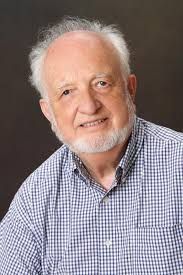
Dr. Cane is a lifelong educator. Born in France, he later became an American citizen and raised bilingual children. He has taught in multiple countries, including North Africa, France, and the United States, and holds a PhD in literature from the University of Michigan. For much of his career, he taught French literature at institutions such as Oberlin College and Occidental College.
In his 50s, Dr. Cane made a significant career shift and became a math teacher. Motivated by dissatisfaction with how math was being taught in American schools—particularly its emphasis on memorizing formulas and procedures—he returned to school to earn math teaching credentials. He went on to teach math in a predominantly minority high school in the Los Angeles Unified School District until he retired.
A pivotal moment for Dr. Cane came from helping his own child with math homework, where he observed that students were expected to memorize formulas (such as the perimeter of a rectangle) rather than deeply understand concepts. This experience led him to critique procedural teaching, which he believes overloads students with disconnected rules and undermines genuine understanding.
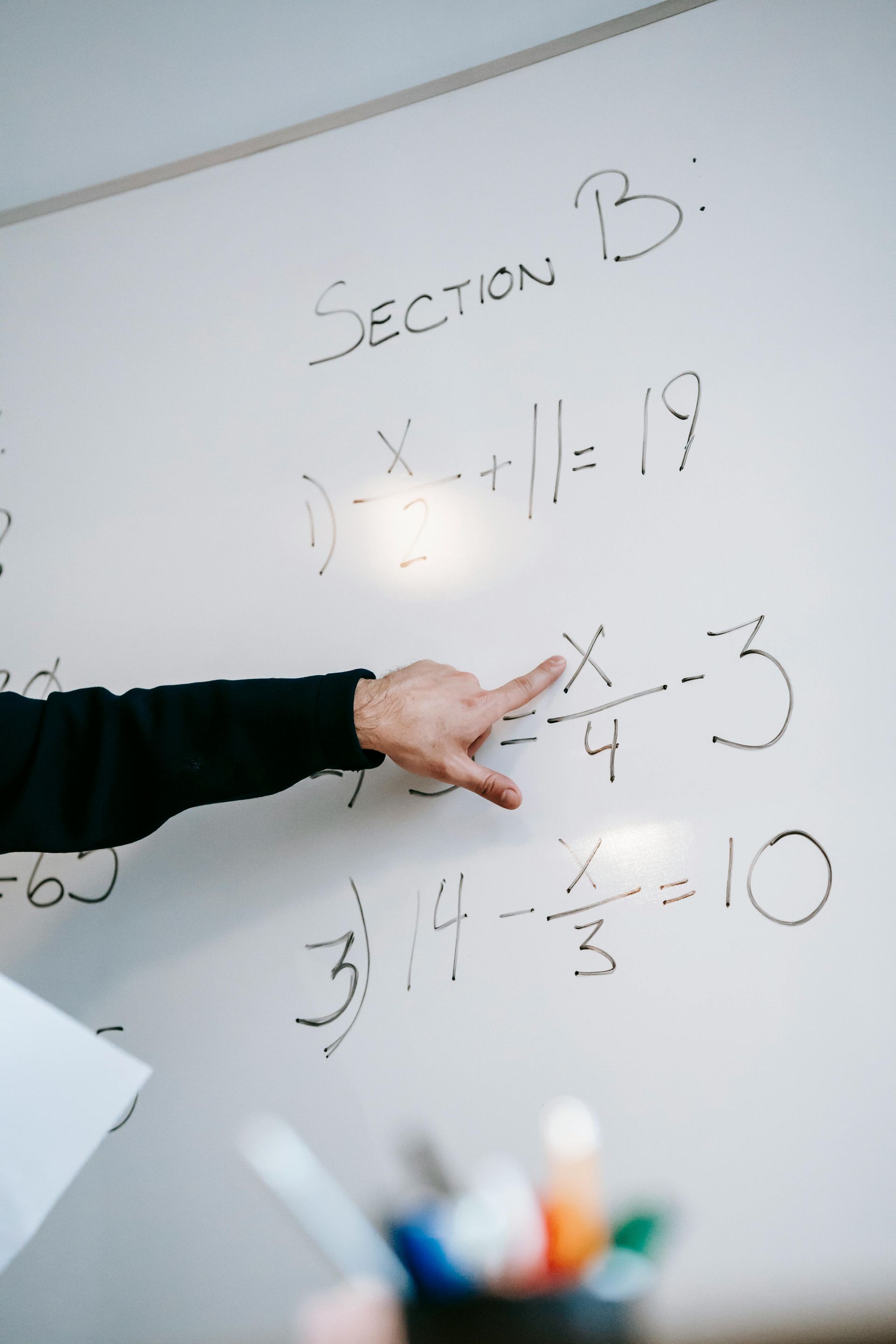
He embraced a new method of teaching math and called it, “Teaching to Intuition.” This technique emphasizes using students’ natural reasoning and everyday understanding rather than rote procedures. He shared an example involving a vertical number line instead of a horizontal number line and visual “bubbles” to teach integer addition, noting that even a seven-year-old could quickly and successfully grasp the concept through this intuitive method. He explained, “I use a vertical number line and I use bubbles. Well, let me write the first [problem] negative 10 plus 3. I put my pen behind each number and circle the number and the sign in front of it.” Using this approach helps students understand how each number is connected to each “sign” or “operation”. Intuitively, this allows the student to grasp how to solve the problem using the correct order of operations. Unsurprisingly, he criticized common mnemonic devices like “Please Excuse My Dear Aunt Sally” for teaching order of operations, arguing that they oversimplify, sometimes mislead students, and distract from true mathematical understanding.
As a math educator, I find Dr. Cane’s approach useful and beneficial to students. Although I personally majored in math in college, it was always an uphill battle. I was able to rely on procedures, formulas, and algorithms to get me through my four years, but math rarely made sense when it pertained to real-world applications. Instead of making valuable connections to get a deeper understanding, I relied on memorized procedures. Now that I am working with teachers as an education specialist, I realize that I never fully understood math and how it connected to applications that made sense to me.
Like myself, not making connections is detrimental to learning math for most students. A Rand Corporation poll found that most middle and high school students tune out during their math lessons because they do not see the relevance in studying the subject (Schwartz et al., 2025). This is strongly because they cannot make connections that make sense to them. As a result, one in three middle and high school students do not see themselves as math learners, while another 25% lose interest in the subject that they once enjoyed. The survey indicates that there is a downward trend of students fully grasping math content which negatively impacts math identities and further supports the need for new approaches to teaching math.
I thought about Dr. Cane’s intuitive teaching model when I went to the grocery store the other day. I bought two boxes of noodles for $1.50 each, three bunches of broccoli for $1.10 each, and one bag of oranges for $3.50. As I prepared to pay, I mentally calculated the total to be sure I had enough money. Intuitively, I knew the noodles would cost $3.00, the broccoli would cost $3.30, and the oranges would cost $3.50. It felt natural to multiply $1.50 by 2, $1.10 by 3, and then add $3.50. This type of reasoning happened automatically, without relying on memorized rules or mnemonics. By bringing this kind of intuitive thinking into the classroom, students can develop a deeper understanding of mathematical relationships and apply the order of operations in a more meaningful and logical way.
I acknowledge that intuitive teaching can be difficult for educators to adopt because change often feels threatening and challenges long‑held habits. Nevertheless, I can see how teaching math through common sense, familiarity, and intuition leads to deeper student understanding and engagement. Intuitive teaching is a concept‑driven approach to mathematics education, grounded in how people naturally think and make sense of the world. This powerful approach highlights the fact that we use math intuitively every day. When these real‑world connections are brought into the classroom, teachers can help make learning math both engaging and meaningful.
Schwartz, H.L., Bozick, R., Diliberti, M.K., Ohls, S. (2025). Students Lose Interest in Math:
Findings from the American Youth Panel Students. Retrieved January 8, 2025, from the RAND web site: https://www.rand.org/pubs/research_reports/RRA3988-1.html