To progress or go back, click "<" or ">" on the bottom left of the slide. Check the vertical three dots for additional options, including selecting CTRL SHIFT F to switch in and out of Full Screen .
To progress or go back, click "<" or ">" on the bottom left of the slide. Check the vertical three dots for additional options, including selecting CTRL SHIFT F to switch in and out of Full Screen .

We expect students to learn by answering questions. A version of that same approach consists in expecting students to learn from examples. We tell them, for instance, that 2/5 is: Another way of writing a division: 2 divided by 5. A quantity equal to the quotient of the division. 2 of something called a fifth. A proportion: 2 out of 5. Etc. We then take it for granted that they can generalize from these examples. “2/5 is 2 of something called a fifth.” They have no difficulty generalizing to “7/8 is 7 of something called an eighth.” Formulating the same knowledge in terms of “numerator” and “denominator” would be difficult to articulate and just as difficult to understand. Trusting students to generalize from examples is better math knowledge than a formulation of the legalistic version. Various versions of ASK don’t TELL and trusting students to GENERALIZE from EXAMPLES can be applied at all levels of mathematical instruction. CLICK to download this article

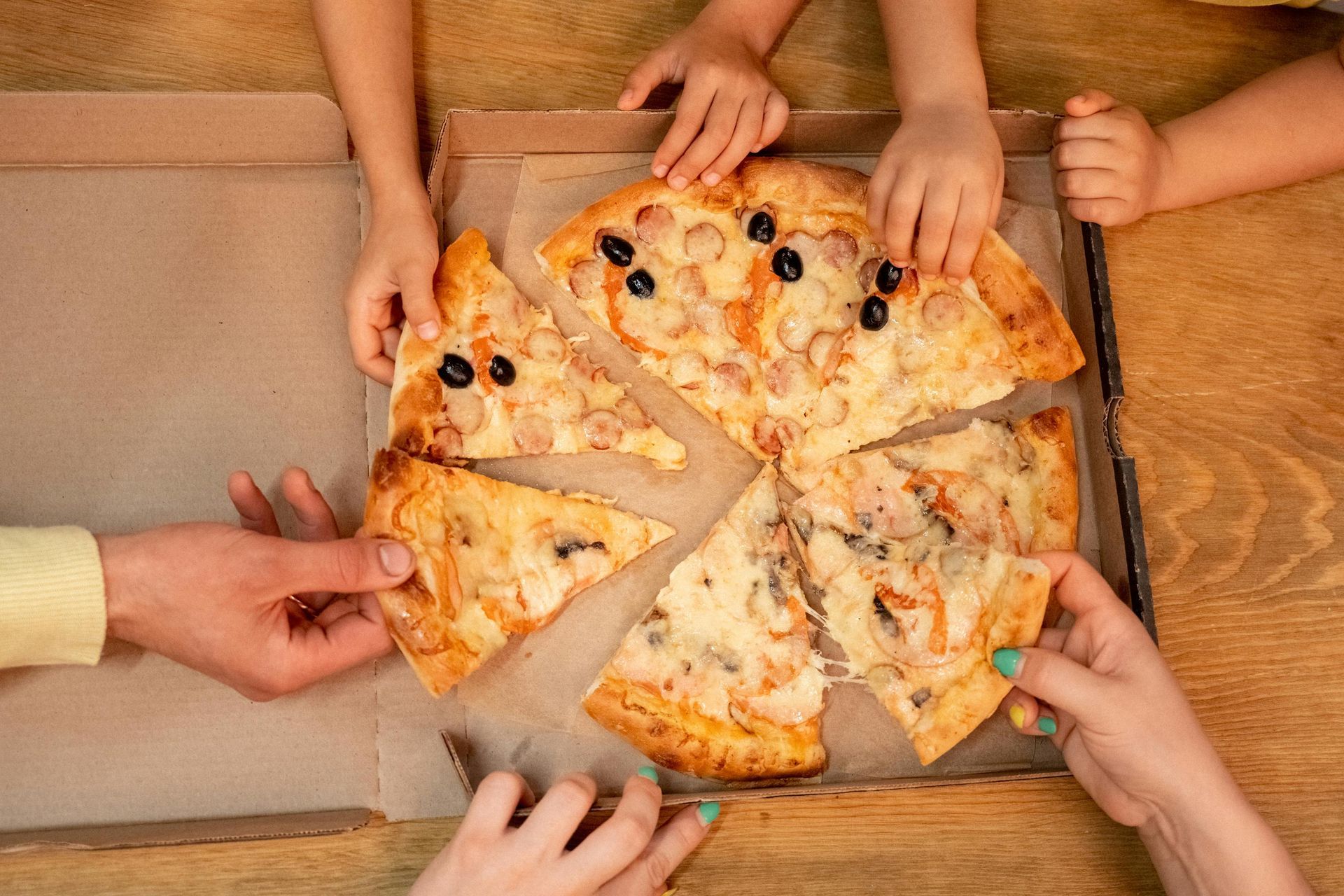
As teachers, we want students to know. So we routinely tell them what we want them to know or allow the textbook to tell them. Students get accustomed to being told what they should know. We expect them, and they expect, to memorize what they are told. This gradually builds up knowledge as a mass of memorized facts, rules and procedures that clog the brain. A very simple and powerful strategy turns that on its head. It can be applied at all levels of math instruction: ASK students instead of TELLING them. Teachers ask me to help explain to students why a large denominator does not mean a large fraction. This understanding is absolutely basic to any understanding of fractions. Let’s apply the ASK don’t TELL strategy. 1/2 One half. In how many parts do I divide the pizza? (2) 1/4 One fourth. In how many parts do I divide the pizza? (4) What about 1/8? In how many parts do I divide the pizza to get eighths? So is 1/8 larger or smaller than 1.4? (1/8 is smaller.) 1/8 is smaller than 1/4 but 8 is larger than 4. Can you tell me why? (Because I cut the pizza in 8 slices instead of just 4.) Students learn from their own answers. The knowledge is not a memorized rule, it is a practical experience. It belongs to the students. They learn something about fractions, and they also learn that knowing math is not about memorizing but about understanding. They soon learn to expect and enjoy that kind of knowledge. They learn to like math. CLICK to download this article

Operations on fractions are a topic that remains a challenge for many Middle School and High School students, sometimes all the way to remedial classes in Community Colleges. It shouldn’t be. First, a diagnostic. The rule for multiplying fractions is not often a challenge. Multiplying the numerators and multiplying the denominators makes sense. Adding and subtracting is the real challenge. Too often, “Add the numerators and keep the common denominator” becomes confused with the rule for multiplying. So, students add the numerators and add the denominators which gives the wrong answer. This is the most common error. The problem is entrusting the knowledge to memory. With no understanding, nothing protects the memorized rule from being mis-remembered. Hence that most frequent confusion with the rule for multiplication. On this important topic, we will propose overtime a number of short approaches. But many students are helped by just helping them make a connection between the rule for adding fractions and the familiar experience of adding anything else. It’s as simple as asking: What’s 2 dollars + 2 dollars? So, what’s 2 fifths + 2 fifths? What’s 5 books + 3 books? So, what’s 5 sixteenths of an inch + 3 sixteenths of an inch? What’s 9 cookies minus 3 cookies? So, what’s 9 tenths minus 3 tenths? No rules here. Just asking questions and a connection with common sense. CLICK to download this article